Share This Page!


In a landmark moment for the region’s cultural diplomacy, the rich tapestry of Northeast India’s handlooms, handicrafts and agro-horticultural wealth was showcased for the very first time at the prestigious ‘At Home’ banquet hosted by the President of India at Rashtrapati Bhavan.
The display was curated and presented by the North Eastern Handicrafts and Handlooms Development Corporation (NEHHDC), making this the first time ever that the diverse cultural identity of all eight Northeastern states was collectively represented at Rashtrapati Bhavan.
The distinguished gathering was graced by the President of India, Smt. Droupadi Murmu, and the Prime Minister of India, Shri Narendra Modi, along with several Union Ministers, senior officials, diplomats and international dignitaries. The event was further elevated by the presence of Ms. Ursula von der Leyen, President of the European Commission, who was the Chief Guest for the 2025 Republic Day celebrations and Mr. António Costa, President of the European Council, alongside other global representatives.
A Canvas of Culture and Craft
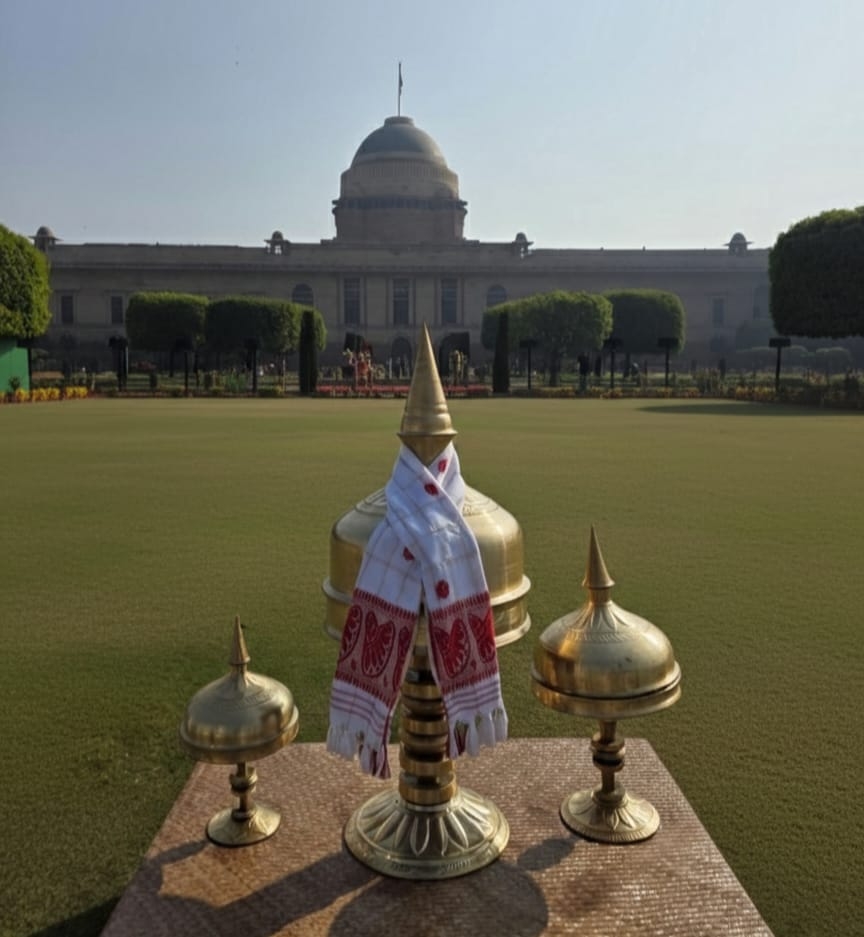
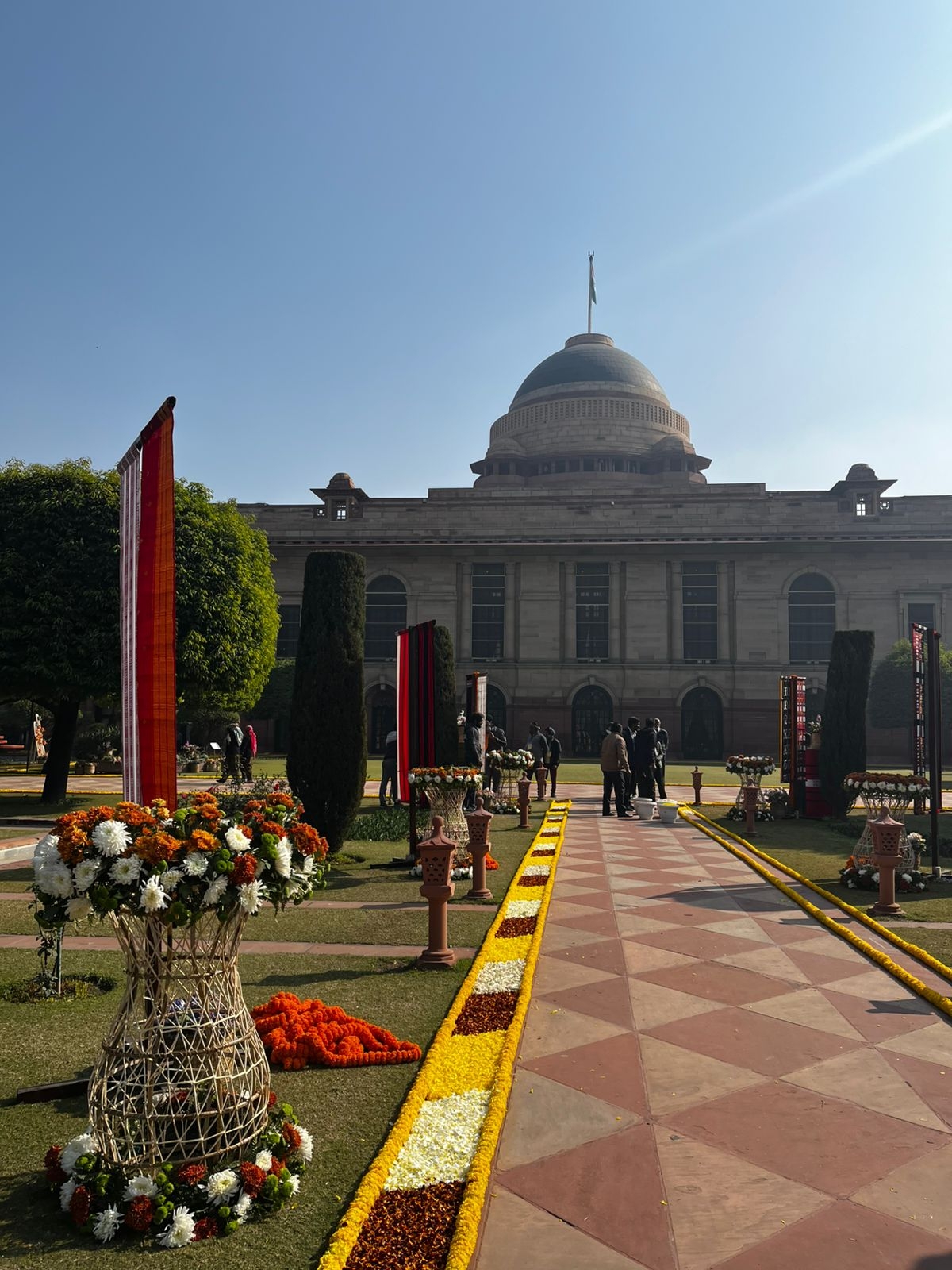
The meticulously curated installations by NEHHDC transformed the venue into a living gallery of the Northeast India’s culture, weaving together stories of sustainability, community and indigenous engineering. Icons of Welcome and Hospitality: Guests were greeted by the sight of the Brass Xorai and the Assamese Gamosa, the quintessential symbols of respect and hospitality from Assam. Paired with these were the Singtha Naga Plate and bundles of Dry Corn Husks, representing the warmth and bounty of the Naga kitchen.
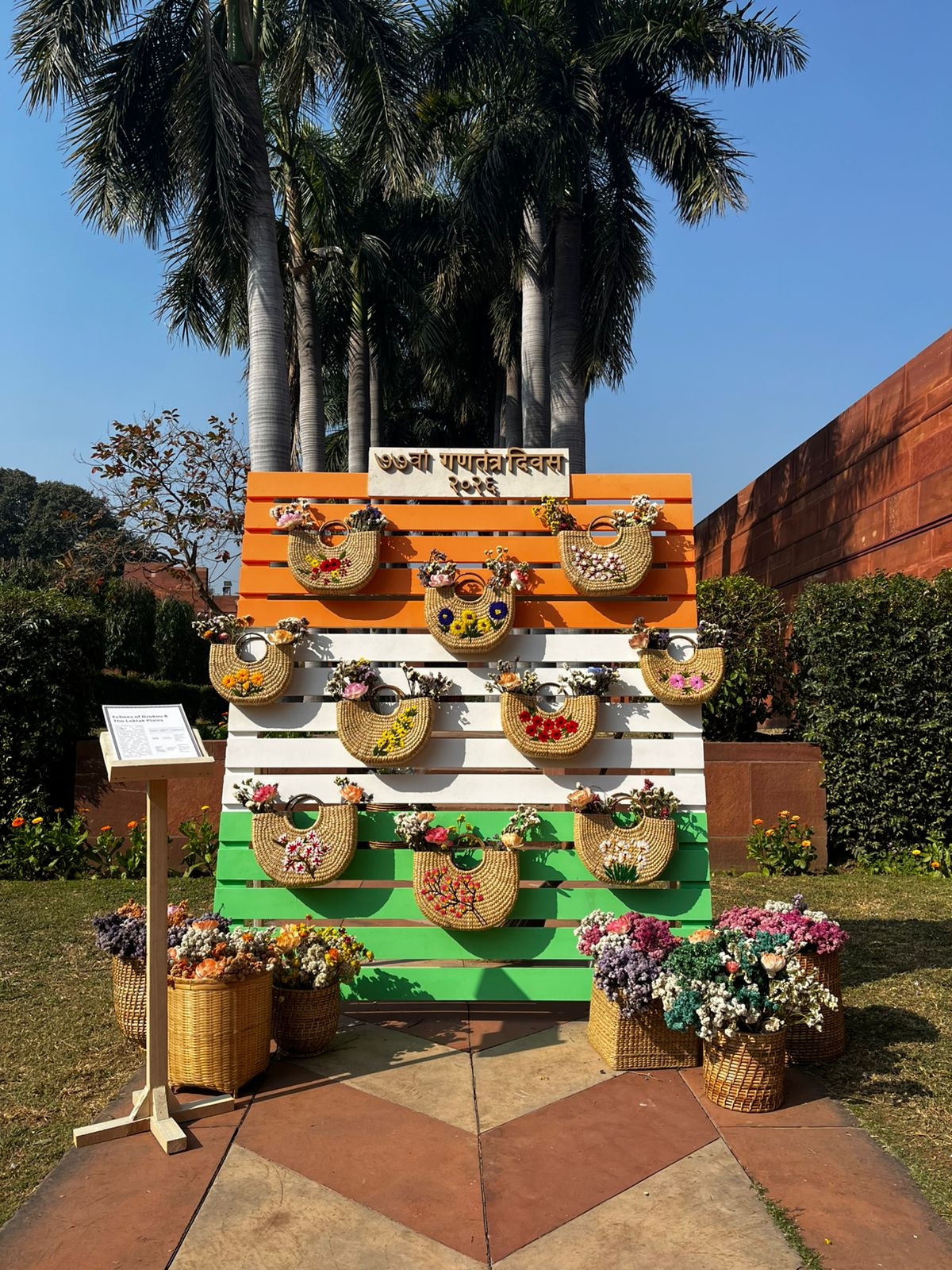
Echoes of Nature and Livelihood: The installations paid poetic tribute to the region's landscape. The "Echoes of Dzukou & Loktak" display featured Kauna grass baskets from Manipur holding dry Statice flowers, symbolizing the mist-kissed Dzüko Valley. A tribute to the wetlands was showcasing through traditional fishing gears like Jakoi, Polo, and Juluki—bamboo masterpieces of indigenous engineering used in the riverine lives of the region.
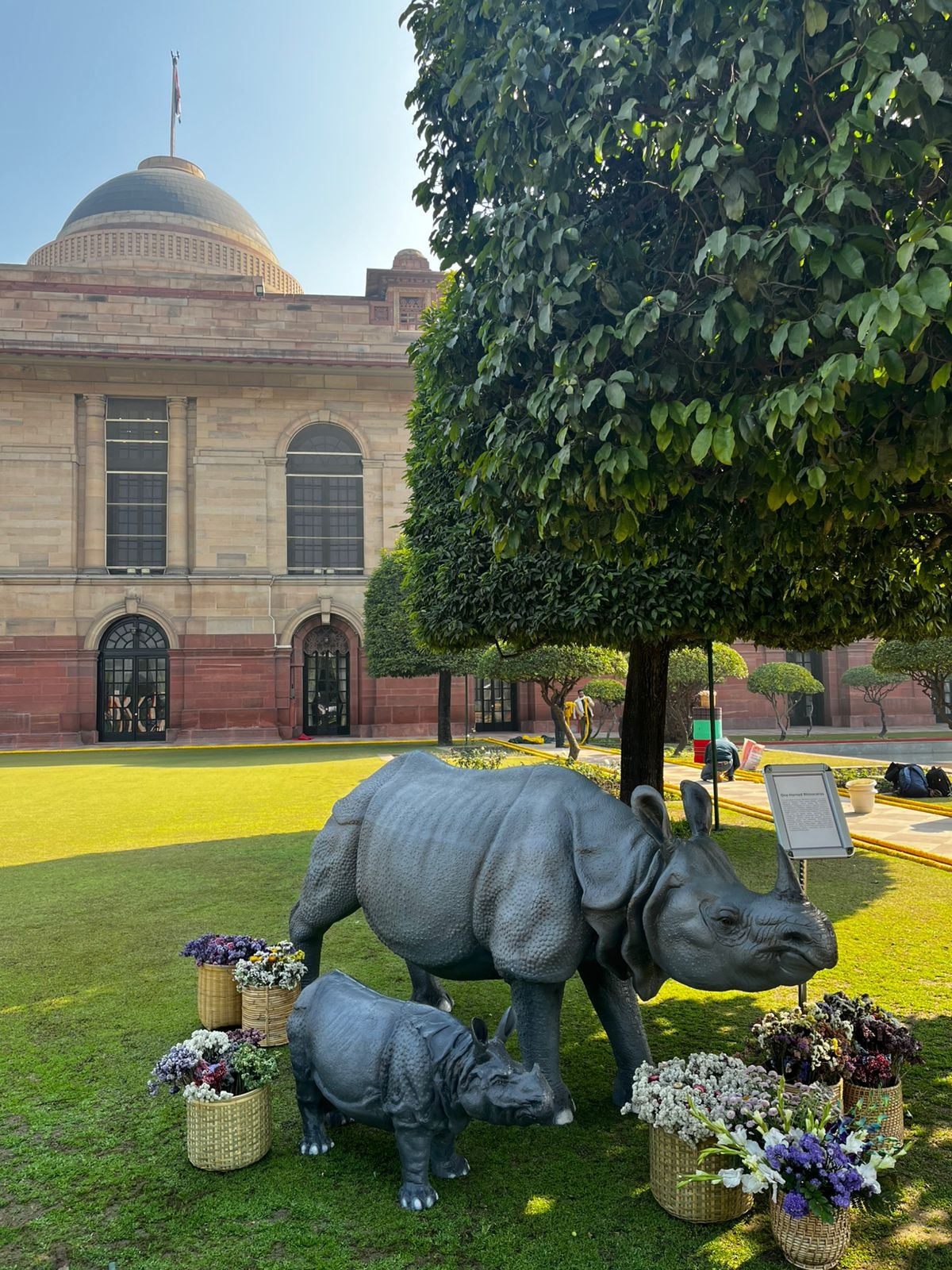
Artistry in Earth and Cane: The rare Longpi (Nungbi) Black Pottery from Ukhrul, Manipur, celebrated for its stone-clay fusion, was displayed alongside the ethereal Shirui Lily. The region’s fauna was immortalized through life-sized cane sculptures of the One-Horned Rhinoceros—the pride of Assam’s floodplains—and the Cane Elephant, symbolizing the ecological history of the Northeast.
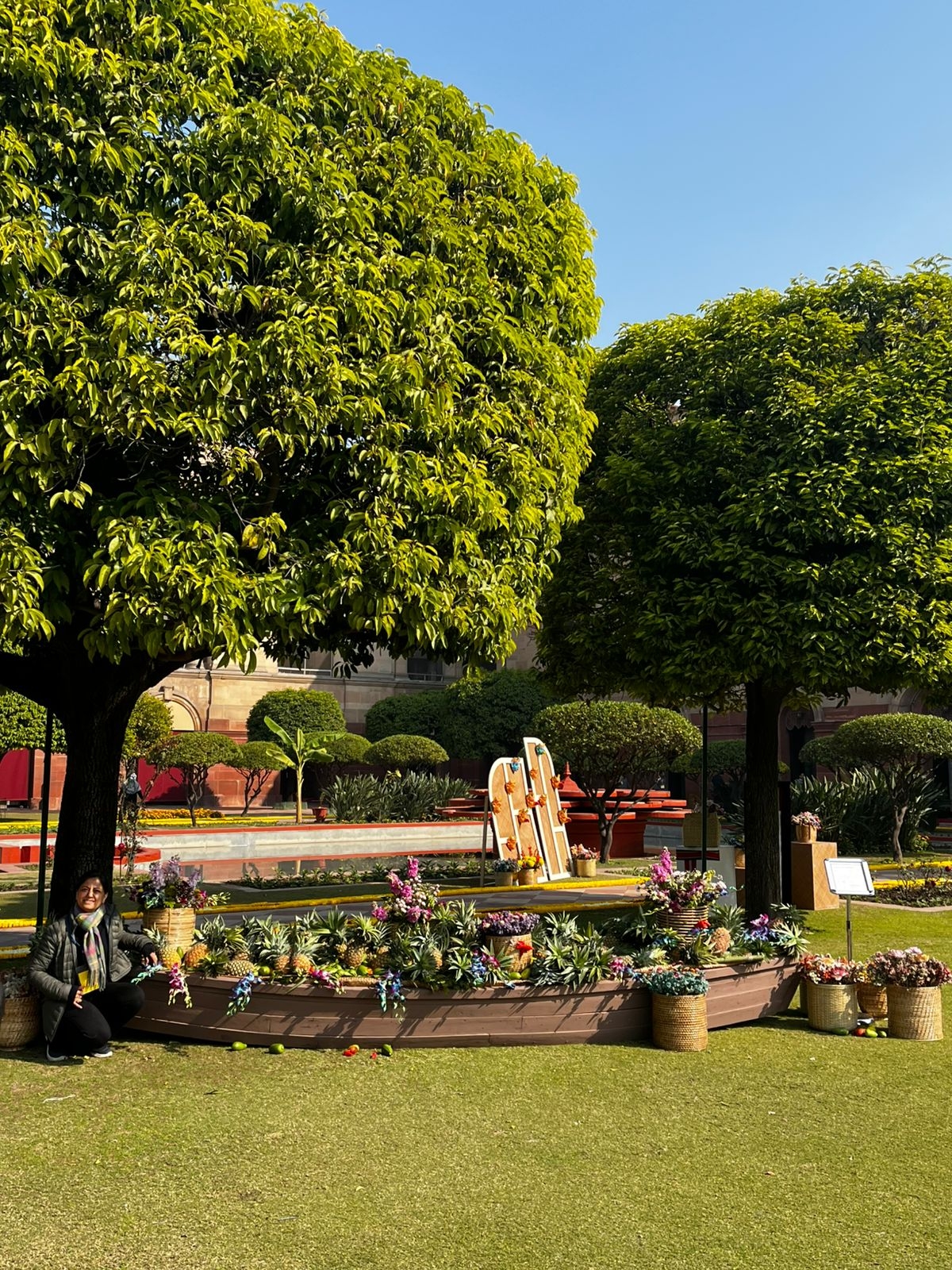
The Boat Fruit Basket and Organic Tricolour: A centerpiece of the exhibition was the "Boat Fruit Basket," a vessel representing the lifeline of the Brahmaputra and Loktak. It carried a "Floating Republic" of GI-tagged treasures: Kaji Nemu (Assam Lemon), Khasi Mandarin, Queen Pineapple (Tripura), and the fiery Naga King Chilli. A masterfully woven cane structure reimagined the Indian Tricolour using organic produce: Saffron from oranges, White from Arunachal’s orchids, and Green from lemons.
Textiles and Weaving Traditions: The "Loinloom Stage" highlighted the ancient back-strap weaving technique common to the hill tribes, while the dining experience was enhanced by octagonal table mats representing the eight states. These mats featured distinct motifs such as the Moirang Phee (Manipur), Puanropui (Mizoram), Risa (Tripura), and geometric Naga patterns.
The Symbol of Pride: Assamese Japi: Adding to the grandeur was the Assamese Japi, the traditional conical hat made from tightly woven bamboo and cane. Historically used by farmers for protection against the sun and rain, and by royalty as a status symbol, the ornate Fulam Japi stood tall at the venue as a definitive emblem of Assamese pride and cultural identity.
Exquisite Table Settings and Handwoven Motifs
For the first time, every table at the reception featured Octagonal Table Mats, a design choice made to symbolically represent the unity of the eight Northeastern states—Assam, Arunachal Pradesh, Manipur, Meghalaya, Mizoram, Nagaland, Tripura and Sikkim. These mats were placed directly on the tables for all arriving dignitaries to experience.
Manipur: The mats featured the iconic Moirang Pheejin motif, inspired by the mythical serpent deity Pakhangba, and the Leirum Phee pattern, a symbol of community identity.
Mizoram: Dignitaries were introduced to the "grand" Puanropui textile and the Lenbuang motif, which represents local nature and heritage.
Meghalaya: Exhibits included the Dakmanda floral patterns of the Garo tribe and the Thohriawstem check shawl, the most distinct textile of Khasi culture.
Nagaland: The bold geometric patterns of Naga Loin Loom weaves were displayed, with red symbolizing valour and black representing the earth.
Tripura: Mats represented the weaving traditions of four major indigenous tribes: the Reang, Jamatia, Tripuri, and Chakma.
Sikkim: The visual language of the Lepcha and Limbu tribes was showcased, featuring motifs inspired by the Himalayan landscape.
A Landmark Moment for Northeast India
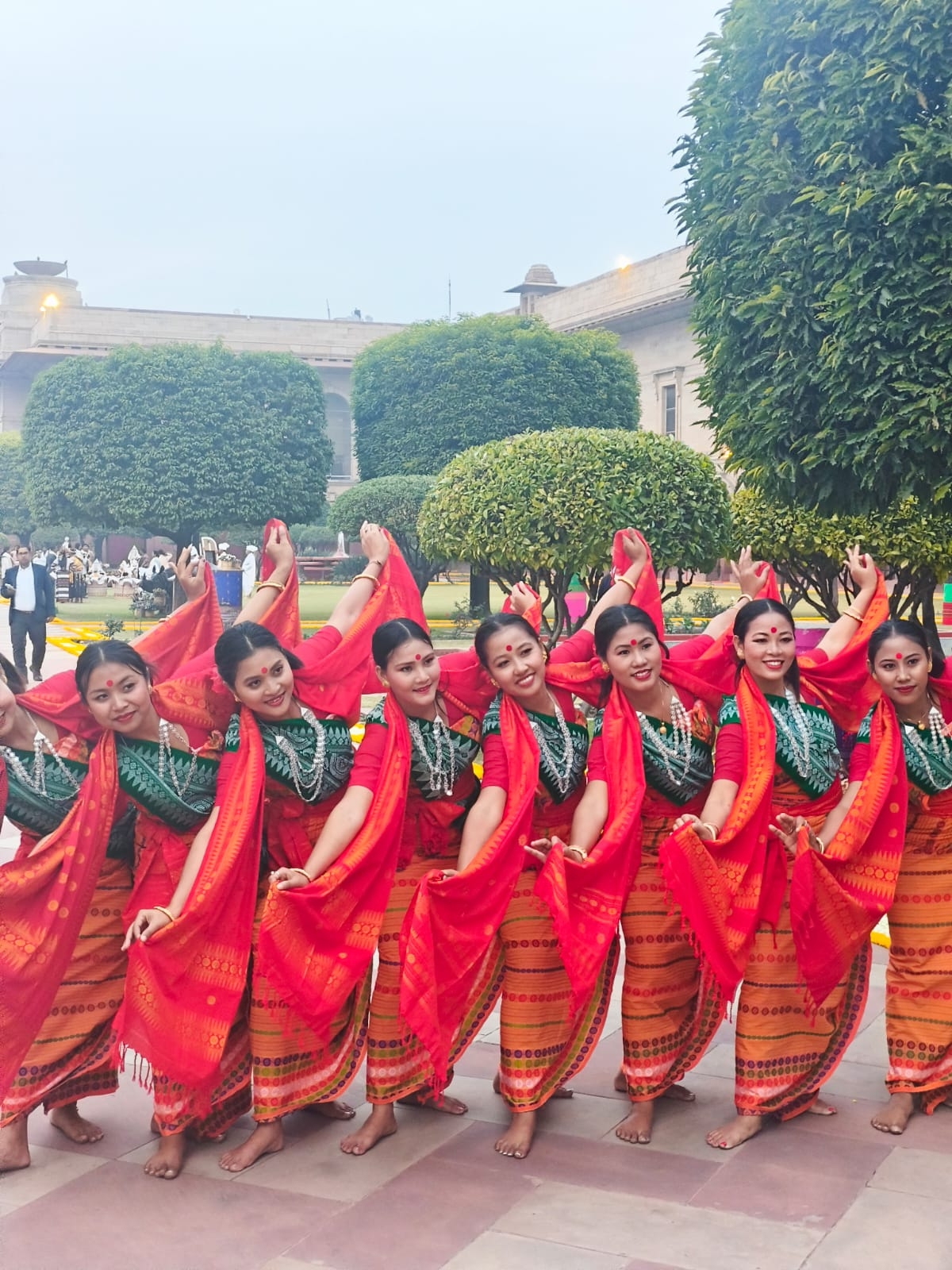
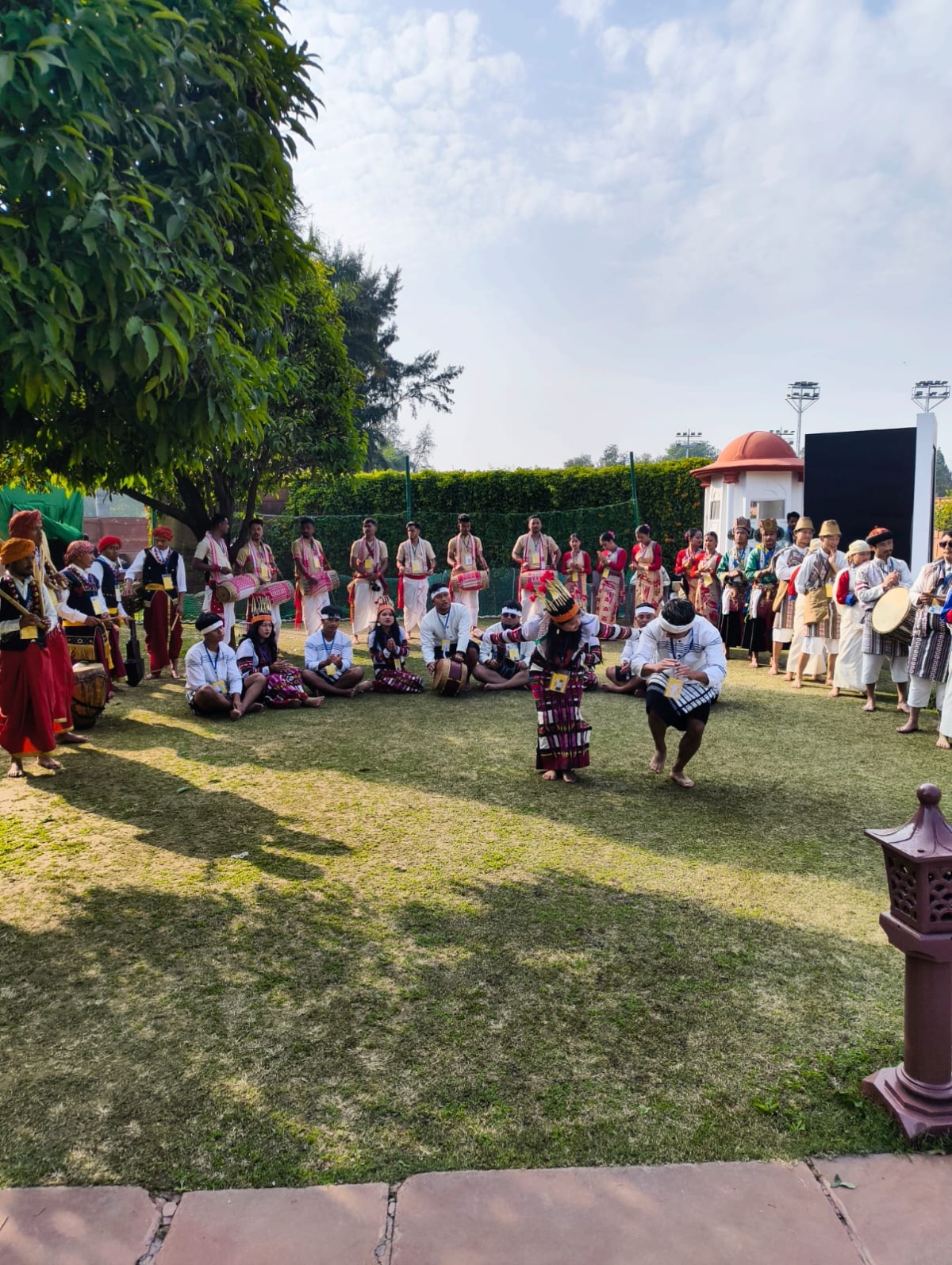
Adding vibrancy to the occasion, traditional cultural performances were also presented from all 8 Northeastern States, offering guests a glimpse into the living traditions of Northeast India and reinforcing the region’s dynamic cultural presence.
This historic presentation at Rashtrapati Bhavan stands as a landmark moment for Northeast India—bringing its crafts, culture and people into the national spotlight like never before. Through this initiative, NEHHDC reaffirmed its role in preserving, promoting and presenting the living heritage of the Northeast on India’s highest ceremonial stage.

North Eastern
Handicrafts & Handlooms Development Corporation Ltd




Quick Contact
Corporate Office
North Eastern Handicrafts & Handlooms Development Corporation Ltd
(A Government of India Enterprise)
NEHHDC, Craft Promotion Center,
Garchuk, Pamohi Road,Guwahati-781035
Registered Office
C/O Purbashree Emporium
NEHHDC Ltd., Police Bazar
Shillong -793001 (Meghalaya)
Phone & Fax- 0364-2224477

Contact Us